
 English
 Español
Forged Aluminum Cookware: The Ultimate Guide to Durability, Performance, and Care
Introduction to Forged Aluminum Cookware In the world of culinary arts, the right tools can make all the difference. Whi...
In the world of culinary arts, the right tools can make all the difference. While countless cookware materials vie for a spot in your kitchen, forged aluminum has emerged as a top contender, celebrated for its unique combination of strength, efficiency, and versatility. Unlike its more common counterparts, forged aluminum cookware offers a premium cooking experience, whether you’re a professional chef or a home cook. This guide will walk you through everything you need to know about this remarkable material, from its manufacturing process to how to care for your pots and pans so they last a lifetime.
Forging is a metalworking process that shapes metal using localized compressive forces.In the case of cookware, a solid piece of aluminum (known as a billet) is heated and then subjected to immense pressure, either through hammering or pressing.This process alters the internal grain structure of the metal, eliminating imperfections like voids or porosity that can be found in cast aluminum. The result is a much denser, stronger, and more durable piece of metal. This superior strength is what makes forged aluminum so desirable for cookware, as it is highly resistant to warping, bending, and denting—issues that plague many other materials.
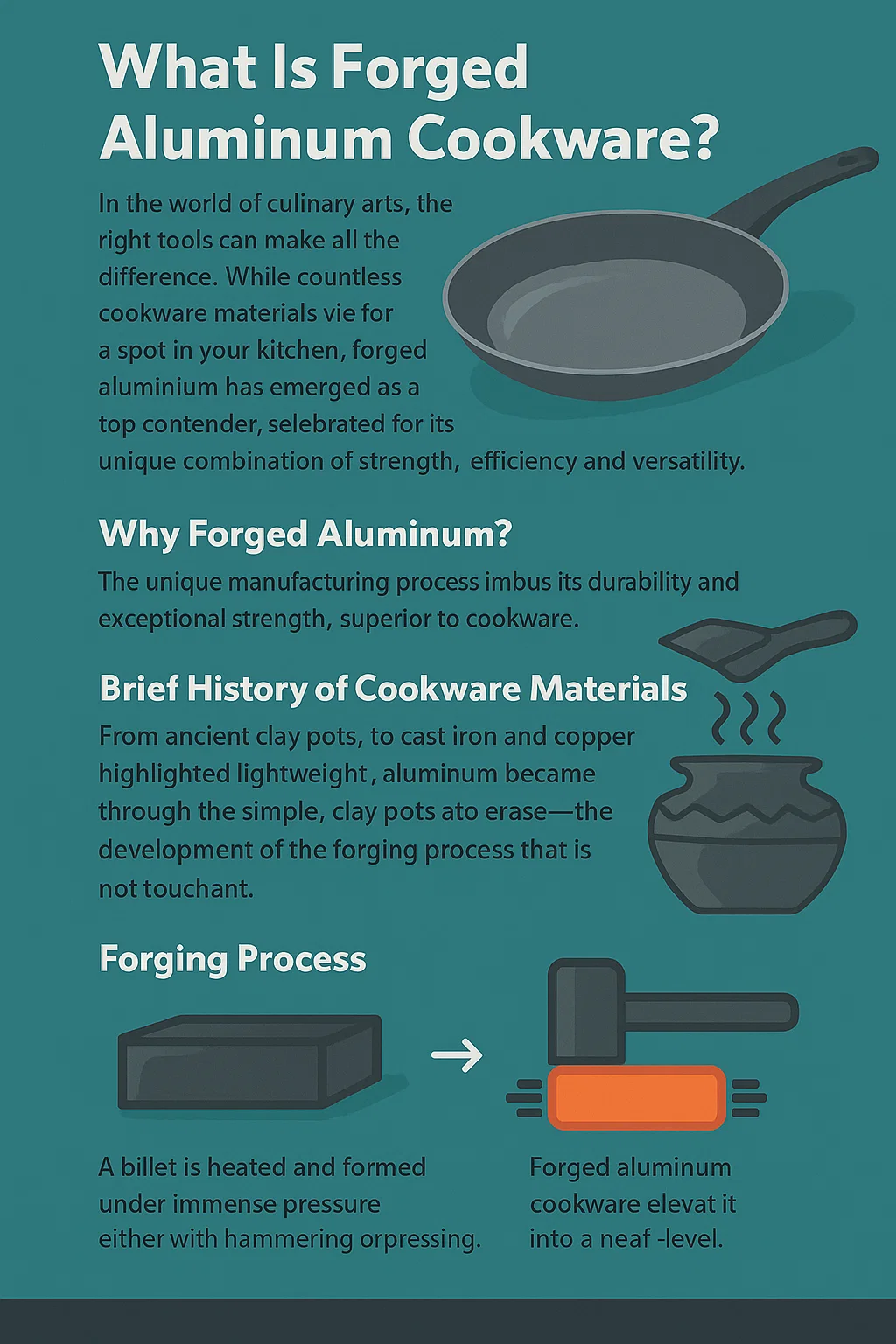
Choosing cookware is a significant investment. Forged aluminum stands out for several key reasons. Its unique manufacturing process imbues it with a level of durability and performance that few other materials can match. It offers a perfect balance of a light weight and exceptional strength, making it easy to handle without sacrificing robustness. Furthermore, its excellent heat conductivity ensures your food cooks evenly and consistently, preventing scorching and hot spots.
The journey of cookware from ancient clay pots to modern forged aluminum is a testament to human innovation. For centuries, cast iron and copper were the gold standards, known for their durability and excellent heat properties. However, their heavy weight and high maintenance requirements led to the search for more practical alternatives. The introduction of aluminum was a game-changer. Initially used in its stamped and cast forms, it provided a lightweight and affordable option. However, these methods often resulted in cookware that was prone to warping and had uneven heat distribution. The development of the forging process for cookware elevated aluminum to a new level of performance, combining the best of its natural properties with the structural integrity of a premium material. This evolution highlights a constant quest for cookware that is not only functional but also a pleasure to use.
Forged aluminum cookware isn't just another shiny kitchen gadget; it’s a tool engineered for superior performance and longevity. Its unique manufacturing process gives it a range of benefits that directly impact your cooking results and the lifespan of your pots and pans.
The number one reason chefs and home cooks alike are drawn to forged aluminum is its incredible durability. Unlike stamped or cast cookware, which can be brittle or easily dented, the forging process creates a product with a dense, non-porous grain structure. This makes forged aluminum cookware exceptionally resistant to wear and tear.
Superior Strength Compared to Stamped Aluminum: Stamped aluminum cookware is made from a flat sheet of aluminum pressed into shape. This method is fast and inexpensive, but it leaves the metal thin and prone to warping, especially under high heat. Forged aluminum, on the other hand, is shaped under immense pressure, compacting the metal and creating a much stronger, more robust body.
Resistance to Warping and Denting: Ever had a pan that wobbles on your stovetop? That's typically a sign of warping. The thick, dense base of forged aluminum cookware ensures it remains flat and stable, providing optimal contact with your heat source. This resistance to warping is crucial for consistent cooking, particularly on flat-top electric and induction stoves. It also makes your pans far less likely to dent if they're accidentally dropped or mishandled.
One of the most critical aspects of good cookware is its ability to heat food evenly. No one wants a seared steak that’s burnt in one spot and raw in another. Forged aluminum excels in this area, thanks to the natural properties of aluminum combined with the benefits of its dense construction.
Even Heating for Consistent Cooking Results: Aluminum is an excellent conductor of heat. The thick, forged body ensures that heat spreads quickly and uniformly across the entire cooking surface—from the center to the edges. This eliminates the dreaded "hot spots" that can cause food to burn in one area while leaving other parts undercooked.
Eliminating Hot Spots: Hot spots are concentrated areas of heat that can ruin a dish. With forged aluminum, heat is distributed so efficiently that these spots are virtually eliminated. This allows you to cook everything from delicate sauces to searing meats with confidence, knowing you'll get a consistent result every time.
Many forged aluminum cookware products come with a non-stick coating, turning their excellent heat conductivity into a major advantage for everyday cooking and cleanup.
Types of Non-Stick Coatings Used: The most common non-stick coatings are PTFE (polytetrafluoroethylene), often known by the brand name Teflon, and various ceramic coatings. PTFE coatings are prized for their durability and excellent release properties. Ceramic coatings, on the other hand, are often marketed as being free of PFOA and are known for their eco-friendly manufacturing process. Both types are highly effective when applied to a forged aluminum base, as the smooth, flat surface provides a perfect foundation.
Health and Safety Considerations: Modern non-stick coatings are rigorously tested for safety. Reputable manufacturers have moved away from PFOA and other harmful chemicals, making today's non-stick surfaces safe for cooking. The key is to use them correctly—avoiding overheating and using appropriate utensils—to preserve the coating's integrity and ensure food safety.
Forged aluminum cookware is designed to be a workhorse in the kitchen, adaptable to a wide range of cooking styles and heat sources.
Compatibility with Different Cooktops: Many forged aluminum pans are built with a stainless steel or magnetic base plate, making them induction compatible. This versatility means you can use the same pan on a gas range, an electric coil, a ceramic glass top, or an induction stove without a hitch.
Oven-Safe Temperatures: Most forged aluminum pieces, especially those with stainless steel or silicone handles, are oven-safe. This allows for seamless transitions from stovetop searing to oven finishing, perfect for dishes like frittatas, reverse-seared steaks, or one-pan chicken meals. Be sure to check the manufacturer's specific guidelines for the maximum oven-safe temperature, as this can vary depending on the handle and lid materials.
Choosing the right cookware material is a crucial decision that can impact your cooking style, results, and the longevity of your kitchen tools. While forged aluminum offers a compelling combination of benefits, it's helpful to understand how it stacks up against other popular materials.
This is arguably the most important comparison to make when considering aluminum cookware.
Manufacturing Process: As previously discussed, forged aluminum is shaped from a solid billet under intense pressure, creating a dense and durable product. Stamped aluminum, by contrast, is a simple and inexpensive process where a thin sheet of aluminum is pressed into shape.
Durability and Performance: The difference in manufacturing leads to a significant difference in performance. Stamped aluminum cookware is lightweight but prone to warping, especially at high temperatures, which can lead to uneven cooking. Forged aluminum, with its dense structure and reinforced base, is highly resistant to warping and denting. This superior structural integrity ensures a flat cooking surface and consistent heat distribution.
Cost: Stamped aluminum is typically much more affordable than forged aluminum, reflecting the simpler manufacturing process and lower material density. However, this often comes at the cost of performance and longevity.
Stainless steel is a classic in the kitchen, known for its durability, non-reactivity, and professional appearance.
Heat Conductivity: This is where forged aluminum holds a clear advantage. Aluminum is a far better heat conductor than stainless steel. This means forged aluminum pans heat up more quickly and distribute heat more evenly, eliminating the hot spots often associated with single-ply stainless steel cookware. Many high-end stainless steel products use a "clad" or layered construction (e.g., a core of aluminum or copper) to overcome this limitation.
Durability and Maintenance: Both materials are incredibly durable. However, stainless steel is more resistant to scratches and can be used with metal utensils without risk of damage. It is also completely non-reactive, making it ideal for cooking acidic foods like tomato sauces. While forged aluminum itself is durable, the non-stick coating it often comes with requires more careful handling (e.g., using silicone or wooden utensils).
Non-Stick Properties: A key benefit of non-stick forged aluminum cookware is its natural food-release properties, making cleanup a breeze. Stainless steel, unless it has a non-stick coating, requires more oil and can lead to food sticking, especially when searing.
Cast iron is a heavy-duty material revered for its heat retention and durability.
Heat Retention: Cast iron is unmatched in its ability to hold and retain heat for extended periods, making it ideal for searing, frying, and slow-cooking. Forged aluminum heats up faster but doesn't retain heat as well.
Weight and Handling: This is a major point of difference. Cast iron is extremely heavy, which can make it difficult to lift, move, and clean. Forged aluminum, while dense, is significantly lighter and more manageable, making it suitable for everyday use and for cooks who struggle with heavier pans.
Maintenance: Cast iron requires specific care, including regular seasoning to maintain its non-stick surface and prevent rust. Forged aluminum cookware, particularly with a quality non-stick coating, is far easier to clean and maintain, often requiring just a simple hand wash.
Copper is a premium cookware material known for its beauty and exceptional heat responsiveness.
Heat Conductivity: Copper is the king of heat conductivity, responding almost instantaneously to changes in temperature. This makes it a favorite among professional chefs. While forged aluminum is an excellent conductor, copper is superior in this regard.
Cost and Maintenance: Copper cookware is significantly more expensive than forged aluminum due to the high cost of the raw material. It also requires regular polishing to maintain its aesthetic appeal and prevent tarnishing. Many copper pots are lined with tin or stainless steel, which adds another layer of complexity to their care. Forged aluminum offers a high level of performance at a much more accessible price point and with far less maintenance.
Durability: Both materials are durable, but copper can be more susceptible to dents and scratches than the dense, reinforced structure of forged aluminum.
| Feature | Forged Aluminum | Stamped Aluminum | Stainless Steel | Cast Iron | Copper |
| Manufacturing Process | Forged from a solid billet under intense pressure, creating a dense, non-porous body. | Pressed from a thin, flat sheet of aluminum, resulting in a lighter and less dense product. | Formed from stainless steel sheets, often layered (clad) with other metals like aluminum. | Cast by pouring molten iron into a mold. | Formed from copper sheets, often lined with tin or stainless steel. |
| Durability | Highly durable and resistant to warping, dents, and scratches. | Prone to warping and denting, especially under high heat. | Extremely durable, resistant to scratches, and non-reactive. | Incredibly durable, can last for generations with proper care. | Durable but can be more susceptible to dents than forged aluminum. |
| Heat Conductivity | Excellent. Heats up quickly and distributes heat very evenly, eliminating hot spots. | Good, but due to its thinness, heat distribution can be uneven. | Poor. Heats slowly and can have hot spots unless it is clad. | Excellent heat retention, but heats very slowly. | Unmatched. Responds instantly to changes in temperature. |
| Weight | Lightweight to medium weight, easy to handle for everyday use. | Very lightweight, almost flimsy. | Medium to heavy, depending on the number of layers. | Extremely heavy and can be difficult to handle. | Medium to heavy. |
| Maintenance | Easy to clean, especially with a non-stick coating. Requires careful use with certain utensils. | Easy to clean, but its susceptibility to warping makes it less reliable. | Easy to clean, but can lead to food sticking. Dishwasher safe. | Requires regular seasoning to prevent rust and maintain a non-stick surface. | Requires regular polishing to prevent tarnishing; the lining needs care. |
| Cost | Mid-range to high-end, offering a great balance of price and performance. | Low to very low cost. | Mid-range to high, especially for clad versions. | Mid-range and excellent value for money. | Very expensive, considered a premium cookware material. |
| Best For... | Everyday cooking, even heat distribution, and non-stick performance. | Budget-conscious cooking where durability is not the main concern. | Searing, browning, and cooking acidic foods; professional use. | Searing, frying, and slow-cooking dishes that require high heat retention. | Delicate sauces and dishes that need precise temperature control. |
When you're ready to invest in forged aluminum cookware, understanding the key features that distinguish a high-quality product from a mediocre one is essential. These elements impact not only the performance of your pots and pans but also their safety, longevity, and ease of use.
The core of any great cookware piece lies in its construction. With forged aluminum, specific details reveal the craftsmanship and durability of the product.
Thickness of Aluminum: A key indicator of quality is the thickness of the aluminum used. Thicker bases and walls mean better heat distribution and superior resistance to warping.A forged pan will typically have a thick, reinforced base—often thicker than the sidewalls—to ensure it sits flat on the stove and conducts heat efficiently. Look for specifications or descriptions that highlight a heavy-gauge or multi-layered construction. A thicker base also helps to prevent scorching, as the heat is spread more evenly across the surface rather than concentrating in one area.
Reinforced Rims and Bases: High-quality forged aluminum pans often feature a reinforced or rolled rim. This design element adds structural integrity, preventing the rim from bending or warping over time. A reinforced base, sometimes with an added stainless steel plate for induction compatibility, is a sign of a well-engineered product designed for long-term use. This reinforcement ensures the pan maintains its shape, even under constant thermal stress from heating and cooling.
A pan's handle might seem like a minor detail, but it's crucial for safety, comfort, and performance.
Ergonomic Handles for Comfort and Safety: An ergonomic handle is designed to fit comfortably and securely in your hand. Look for a handle that provides a firm grip and is well-balanced with the weight of the pan. Materials like riveted stainless steel or heat-resistant silicone are common and provide a secure, cool-to-the-touch experience on the stovetop. Avoid flimsy, plastic handles that can become loose or brittle over time. Riveted handles are generally more secure and durable than screw-in types, as they are permanently attached to the pan body.
Heat Resistance: When you’re choosing cookware that is oven-safe, the handle material is a critical factor. Stainless steel handles can withstand high oven temperatures (typically up to 500°F or 260°C), allowing you to seamlessly transfer the pan from the stovetop to the oven. Silicone handles also offer heat resistance, but their temperature limits are often lower, so be sure to check the manufacturer’s instructions. This feature makes a forged aluminum pan incredibly versatile for a wide range of cooking techniques, from searing a steak and finishing it in the oven to baking a frittata.
Lids are more than just covers; they are integral parts of a cookware set, helping to trap heat and moisture.
Tempered Glass Lids for Visibility: Many forged aluminum cookware sets come with tempered glass lids. This is a highly desirable feature as it allows you to monitor your food as it cooks without lifting the lid and releasing heat and steam. Tempered glass is also durable and shatter-resistant, designed to withstand temperature changes without cracking. Look for lids that have a steam vent to prevent pressure buildup and rattling.
Proper Fit and Ventilation: A well-fitting lid is essential for efficient cooking. It should form a tight seal to prevent moisture from escaping, which is particularly important for simmering and braising. A small vent in the lid allows excess steam to escape, which can prevent boil-overs and maintain pressure equilibrium.
Most forged aluminum cookware is sold with a non-stick surface, and the quality of this coating is paramount for both performance and safety.
PTFE vs. Ceramic Coatings: As mentioned earlier, the two main types are PTFE and ceramic. High-quality PTFE coatings are multi-layered for enhanced durability and scratch resistance. They are excellent for food release and easy cleanup. Ceramic coatings, often promoted as a "greener" option, are a non-stick alternative made from silica. They offer good performance but can be more sensitive to high heat and can lose their non-stick properties over time if not cared for properly.
Scratch Resistance and Durability: A quality non-stick coating should be scratch-resistant. Many premium brands use reinforced coatings with mineral particles to increase their durability. To ensure the coating lasts, always follow the manufacturer's care instructions, which typically include using silicone, wood, or nylon utensils and avoiding abrasive cleaning pads. The durability of the non-stick coating is one of the most important factors for long-term satisfaction with your cookware.
Selecting the perfect forged aluminum cookware requires a careful consideration of your personal cooking habits, budget, and the specific needs of your kitchen. With a wide variety of options on the market, taking the time to evaluate your choices will ensure you find a set or a few key pieces that you'll be happy with for years to come.
Your cooking habits are the most important factor in this decision. Are you a minimalist cook who only needs a single frying pan, or do you love to prepare complex meals that require multiple pots and pans?
Individual Pieces vs. Cookware Sets: If you're just starting out or have a limited budget, it might be more practical to buy individual pieces. A high-quality forged aluminum frying pan and a saucepan might be all you need for daily cooking. This allows you to build your collection over time. On the other hand, if you're outfitting a new kitchen or replacing an old set, a forged aluminum cookware set can be a great value. Sets often include a variety of sizes and types of pots and pans, from a small saucepan to a large Dutch oven, ensuring you have the right tool for every job.
Determine Your Most-Used Pieces: Think about what you cook most often. If you frequently make stir-fries or sear meats, a larger frying pan or sauté pan would be a wise investment. If you're a fan of soups, stews, or pasta, a stockpot or a larger saucepan would be more useful. Choosing the right pieces for your specific needs will ensure your cookware gets the most use.
Compatibility with Your Stovetop: As mentioned earlier, not all forged aluminum pans are induction compatible. If you have an induction stove, double-check that the pan you're considering has a magnetic base. Most manufacturers clearly state this in the product specifications.
Forged aluminum cookware sits in a mid-to-high price range, but there are options available at various price points. Setting a budget upfront can help you narrow down your choices.
The "Buy Once, Buy Right" Philosophy: While some forged aluminum cookware may seem expensive, consider it a long-term investment. A high-quality set that is durable and performs well can save you money in the long run by eliminating the need for frequent replacements. Cheaper, stamped aluminum pans might be appealing initially, but they often warp or lose their non-stick coating quickly, leading to more spending down the road.
Balance Between Quality and Price: Look for a brand that offers a good balance. You don't always need to buy the most expensive option to get a durable product. Researching mid-range brands that focus on quality materials and construction can yield great results.
Before making a final decision, consult reviews and ratings from other consumers and reputable sources.
Look for Detailed Feedback: Pay attention to reviews that discuss specific details like heat distribution, the durability of the non-stick coating, handle comfort, and how the pan has held up over time. This kind of feedback is more valuable than simple star ratings.
Beware of "Paid" Reviews: Be discerning and look for reviews on multiple platforms. If all the reviews sound too perfect or are overly positive without specifics, they might be biased.
Cross-Reference Reviews: Check reviews on the manufacturer's website, as well as on third-party retail sites like Amazon, to get a comprehensive view of the product's performance and any common issues.
A company's warranty and return policy are a strong indicator of its confidence in its products.
Lifetime Warranty: Many high-quality cookware brands offer a limited or lifetime warranty against manufacturing defects. This coverage provides peace of mind, knowing that the company stands behind its product.
Reasonable Return Policy: Ensure the retailer or manufacturer has a clear and fair return policy in case the product doesn't meet your expectations upon arrival. This is especially important when buying a large set that you haven't been able to inspect in person.
To ensure your forged aluminum cookware remains in top condition and lasts for many years, proper care is essential. While this type of cookware is known for its durability, the non-stick coating and overall performance can be compromised without the right cleaning and maintenance routines.
Proper cleaning is the most important step in preserving the non-stick surface and overall integrity of your pans.
Proper Handwashing Techniques: Handwashing is almost always the recommended method for cleaning non-stick forged aluminum cookware. To clean your pan, allow it to cool completely after use. Plunging a hot pan into cold water can cause thermal shock, which can lead to warping over time. Use warm, soapy water and a soft sponge or cloth. For stubborn, stuck-on food, let the pan soak for a few minutes before cleaning. Avoid using steel wool, abrasive scouring pads, or harsh chemical cleaners, as these can scratch and damage the non-stick surface.
Dishwasher Safety (if applicable): While some manufacturers claim their forged aluminum cookware is dishwasher safe, it's generally best to avoid putting it in the dishwasher. The harsh detergents and high heat in a dishwasher can degrade the non-stick coating over time. Even if the coating remains intact, the exterior finish of the pan can become discolored or dull. To maximize the life of your cookware, stick to handwashing.
Beyond daily cleaning, a few simple maintenance practices can significantly extend the life and performance of your cookware.
Avoiding Overheating: The biggest threat to the non-stick coating on your forged aluminum pan is excessive heat. The coating can break down when exposed to temperatures that are too high, which can cause food to stick and can potentially release fumes. For this reason, it's crucial to avoid preheating an empty pan on high heat. Use medium heat for most cooking, as the excellent heat distribution of forged aluminum means you rarely need high heat. When searing, a medium-high setting is usually sufficient.
Using the Right Utensils: To prevent scratches and damage to the non-stick surface, always use utensils made of silicone, wood, or heat-resistant nylon. Metal utensils, even if they have rounded edges, can gouge the coating, leading to chipping and flaking. Investing in a good set of non-scratch utensils is a small price to pay for protecting your cookware investment.
How you store your pots and pans can have a major impact on their condition.
Protecting the Non-Stick Coating: When stacking your forged aluminum cookware set or individual pieces, the non-stick coating is vulnerable to scratches from the bottom of other pans or from sharp edges. To prevent this, place a soft cloth, a paper towel, or a pan protector between each pan. There are specially designed pan protectors available that fit between stacked pots and pans, providing a simple and effective solution.
Proper Stacking and Organization: Proper storage not only protects your cookware but also keeps your kitchen organized. Consider using a pot rack or a cabinet organizer to hang or store pans vertically, which prevents them from scratching each other. If stacking is your only option, make sure to use a protective layer between each item.
Following these simple care instructions will not only keep your forged aluminum cookware looking new but will also ensure it continues to perform at its best, making your cooking experience more enjoyable and efficient. Regular maintenance is key to long-term satisfaction with your investment.
Even with the best care, you might encounter some common issues with your forged aluminum cookware. Understanding the root causes of these problems and knowing how to fix them can save you from frustration and extend the life of your cookware.
Food sticking to your non-stick pan is one of the most common and frustrating problems.
Troubleshooting Non-Stick Issues: The first thing to consider is whether the pan was properly prepared. Ensure the pan is clean and dry before use. While non-stick surfaces require very little oil, a small amount of fat or oil can still help with food release and add flavor. If food is still sticking, the non-stick coating might be compromised. This can happen from overheating the pan, using metal utensils, or using abrasive cleaners. If the non-stick properties are completely gone and you can see a noticeable difference in the surface, it might be time to replace the pan, as a damaged coating can no longer be trusted for its intended purpose.
Overheating: As a reminder, overheating is the number one cause of non-stick coating failure. If you accidentally leave your pan on high heat for an extended period, the coating can be permanently damaged, causing it to lose its non-stick properties. Always cook on medium heat or lower, and avoid preheating an empty pan for more than a minute or two.
Scratches on the surface of your cookware are not only unsightly but can also diminish the effectiveness of the non-stick coating.
Preventing Scratches: Prevention is key. Always use utensils made from soft, non-abrasive materials like silicone, wood, or nylon. When cleaning, use a soft sponge or cloth and avoid abrasive scouring pads or steel wool. When storing your forged aluminum cookware set, place a soft cloth or a pan protector between each item to prevent contact with other metal surfaces.
Repairing Minor Damage: Unfortunately, once the non-stick coating is scratched or damaged, it cannot be repaired. There are no safe, effective at-home solutions to fix a gouged non-stick surface. If the scratch is minor and doesn't affect performance, you may be able to continue using the pan with extra care. However, if the coating is flaking or peeling, it is a health and safety concern and the pan should be retired. The integrity of the anodized forged aluminum underneath the coating may be unaffected, but the main feature you paid for—the non-stick surface—will no longer function.
Warping is when the bottom of the pan is no longer flat, causing it to rock on a flat stovetop and leading to uneven heat distribution.
Causes of Warping: The most common cause of warping is thermal shock. This happens when a hot pan is exposed to a sudden and dramatic change in temperature, such as when you place it under cold water immediately after taking it off the stove. The rapid contraction of the metal can cause it to deform. High heat can also cause warping, especially on pans with a thin base, though this is less common with high-quality forged aluminum cookware due to its reinforced base.
Preventative Measures: The solution is simple: always let your pan cool down to room temperature before washing it. Never pour cold water into a hot pan or place a hot pan in a sink full of water. With the proper care and respect for the material, a well-made forged aluminum pan should never warp. If a pan does warp, it is often a sign of a manufacturing defect or improper use, and if it's within the warranty period, you may be able to get a replacement.
The cookware industry is constantly evolving, driven by consumer demand for safer, more efficient, and sustainable kitchen products. Forged aluminum cookware, with its strong foundation of durability and excellent heat performance, is well-positioned to be at the forefront of these future trends.
The most significant changes in cookware are happening at the surface level, with manufacturers developing new coatings that are safer, more durable, and more effective.
Next-Generation Non-Stick Coatings: The future will likely see a move away from traditional PTFE coatings, not because of safety concerns with modern formulations but in response to consumer demand for PFAS-free products. New innovations in ceramic, silicone-based, and even hybrid coatings are on the horizon. For example, researchers are developing coatings that mimic the properties of Teflon using materials that do not contain long-chain PFAS, offering similar performance with a much smaller environmental footprint.These new coatings are designed to be more scratch-resistant and durable, promising a longer lifespan for non-stick forged aluminum cookware.
Enhanced Performance Materials: We may also see the integration of advanced materials directly into the forged aluminum body. Manufacturers are already using different alloys and are exploring hybrid technologies to further improve performance. For instance, incorporating materials like graphene or other advanced composites into the non-stick coating can enhance heat conductivity and abrasion resistance, making the pans even more efficient and long-lasting.
As consumers become more environmentally conscious, the cookware industry is adapting its manufacturing processes and materials.
Recycled Aluminum: The forging process itself is highly energy-intensive. However, companies are increasingly using recycled aluminum billets to create their cookware. Aluminum is infinitely recyclable, and using recycled materials requires significantly less energy than producing primary aluminum from bauxite. This shift toward a circular economy in cookware manufacturing reduces the environmental impact and appeals to eco-conscious consumers.
Eco-Friendly Manufacturing: Beyond materials, manufacturers are also focusing on reducing waste and energy consumption in their production lines. This includes everything from the forging process to the final packaging, with a focus on minimal, recyclable, or compostable materials. The future of forged aluminum cookware is a product that not only performs well but also has a smaller carbon footprint.
The rise of the "smart kitchen" is not limited to ovens and refrigerators; it's extending to the pots and pans themselves.
Built-in Sensors and App Connectivity: Imagine a forged aluminum frying pan with a built-in temperature sensor that communicates with an app on your smartphone or a smart stovetop. This technology can provide real-time temperature feedback, guide you through a recipe step-by-step, and automatically adjust the heat to prevent scorching. These "smart" features can take the guesswork out of cooking and help you achieve consistent, professional-level results.
Enhanced Cooking Experience: While some may view smart cookware as a gimmick, its potential is significant. It can help new cooks learn fundamental techniques, and it can offer seasoned chefs a new level of precision. Features like perfect searing temperatures or automatic timers for simmering can elevate the cooking experience and lead to less food waste and more delicious meals.
The future of forged aluminum is bright. By combining the inherent strength and performance of forged metal with cutting-edge material science, a commitment to sustainability, and smart technology, it will continue to be a top choice for kitchens around the world.
Introduction to Forged Aluminum Cookware In the world of culinary arts, the right tools can make all the difference. Whi...
What is Forged Aluminum? Forged aluminum is a type of cookware material that stands out due to its strength, durability,...
Why Forged Aluminum Casserole Provides Consistent Cooking Results The ability to achieve consistent cooking results is o...
Introduction of Forged Aluminum Casserole In the world of cookware, selecting the right casserole dish can make a signif...

 +86-0574-8752 8736
 [email protected]
COPYRIGHT © NINGBO VELINA KITCHENWARE CO., LTD.
 Wholesale Aluminum Cookware Manufactures